Design Tips for Small Bathroom Shower Areas
Designing a small bathroom shower involves maximizing space while maintaining functionality and style. Efficient layouts can significantly enhance the usability of limited space, making the bathroom feel more open and comfortable. Common layouts include corner showers, walk-in designs, and shower-tub combinations, each suited to different space constraints and user preferences. Proper planning ensures that plumbing, storage, and movement are optimized without overcrowding the area.
Corner showers utilize often-unused space in small bathrooms, fitting neatly into a corner to free up floor area. These layouts often incorporate sliding or pivot doors to minimize space needed for opening. They are ideal for maximizing available space without sacrificing shower size.
Walk-in showers create an open, accessible feel in small bathrooms. They typically feature frameless glass enclosures and minimal barriers, which visually expand the space. These layouts can include built-in benches or niche shelves for storage.
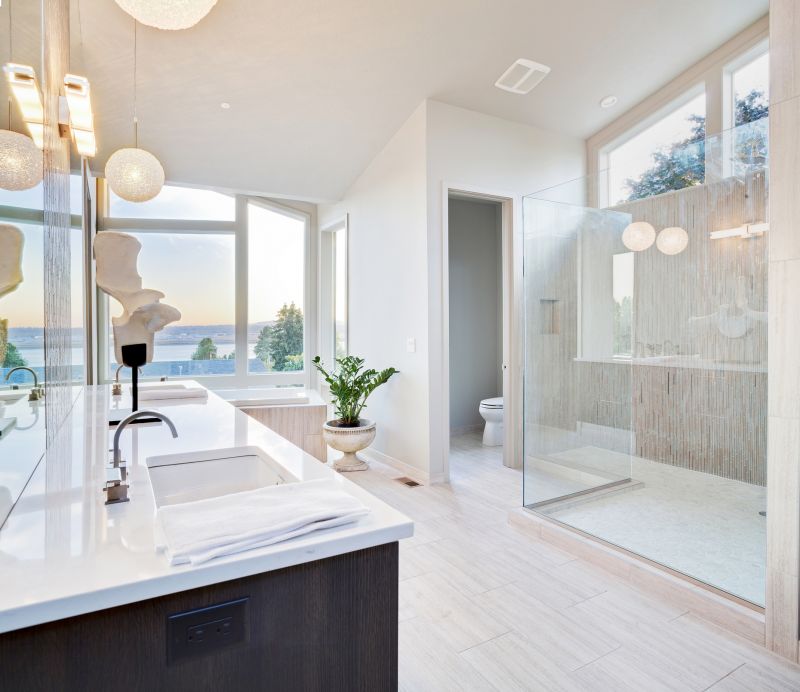
A compact glass-enclosed shower with clear panels enhances the perception of space by allowing light to pass through freely.
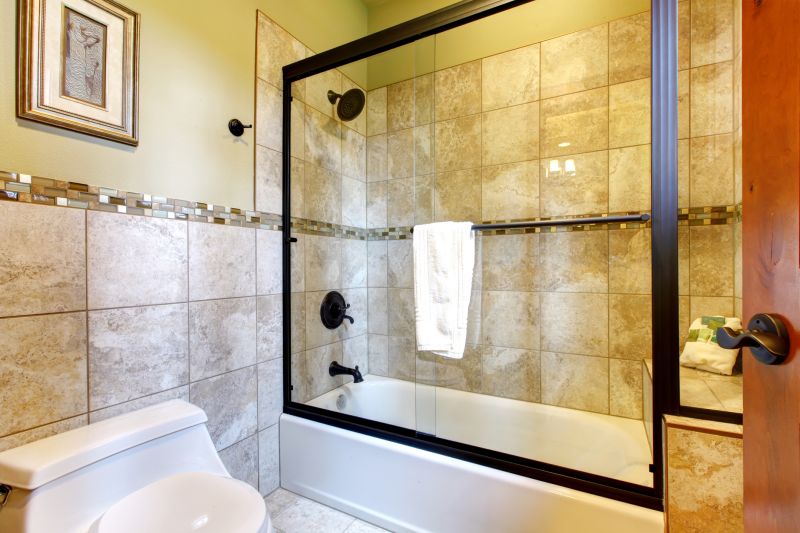
This layout features a sliding door to save space, ideal for narrow bathrooms.
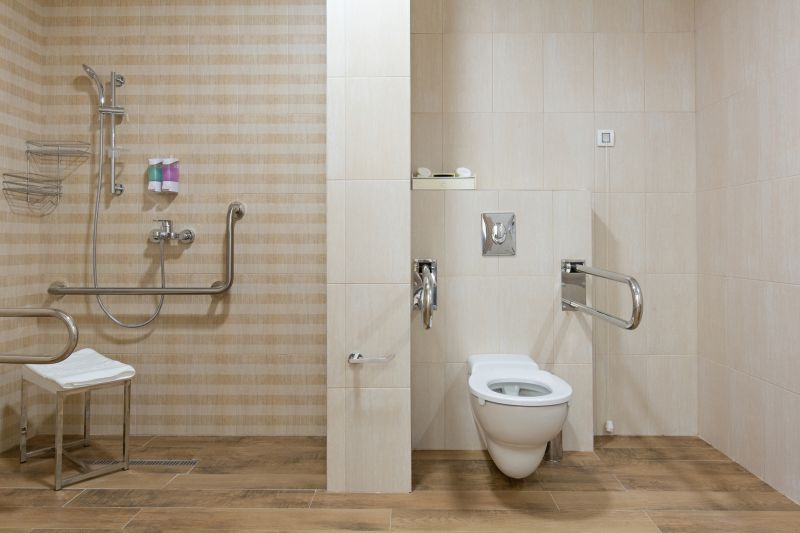
A minimalist walk-in design with a built-in bench offers comfort without cluttering the room.
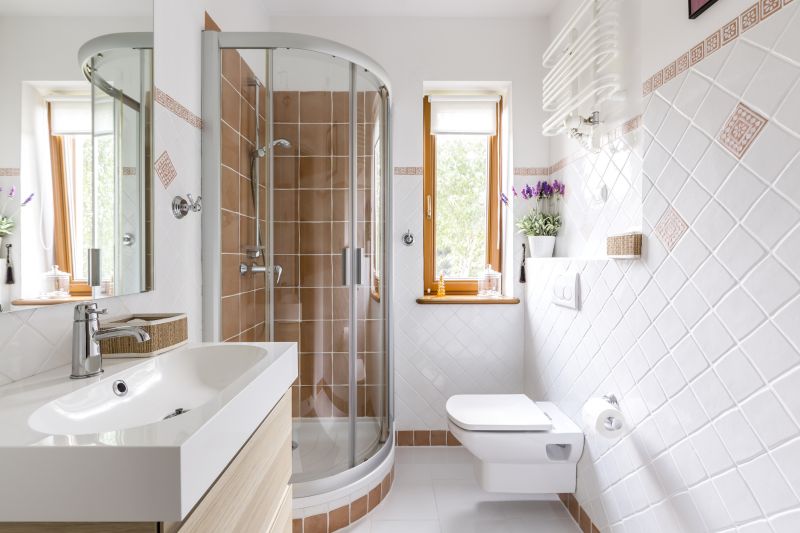
Corner showers with embedded niches provide convenient storage solutions within tight spaces.
| Layout Type | Advantages |
|---|---|
| Corner Shower | Maximizes corner space, suitable for small bathrooms |
| Walk-In Shower | Creates an open feel, easy to access |
| Shower-Tub Combo | Provides versatility and bathing options |
| Neo-Angle Shower | Uses angled walls to save space |
| Pivot Door Shower | Allows door to swing inward, saving room |
Choosing the right shower layout for a small bathroom depends on several factors including available space, user needs, and aesthetic preferences. Corner showers are highly efficient in tight spaces, offering a practical solution without sacrificing shower size. Walk-in designs, meanwhile, promote a sense of openness and accessibility, especially when combined with glass enclosures that reflect light and make the room appear larger. Shower-tub combinations can be beneficial in multi-use bathrooms, providing flexibility for bathing and showering within limited space.
Innovative storage solutions are essential in small bathroom shower layouts. Niches, shelves, and built-in benches can hold toiletries without cluttering the space. Selecting fixtures and fittings that are scaled appropriately ensures the bathroom remains functional without feeling cramped. Light colors and transparent materials, such as glass, further enhance the perception of space, making small bathrooms more inviting and comfortable.
Lighting plays a crucial role in small bathroom shower design. Proper illumination can make the space appear larger and more welcoming. Combining natural light with well-placed artificial lighting highlights the features of the shower area while ensuring safety and visibility. Thoughtful design choices, including minimal framing and sleek hardware, contribute to a modern and streamlined appearance.